

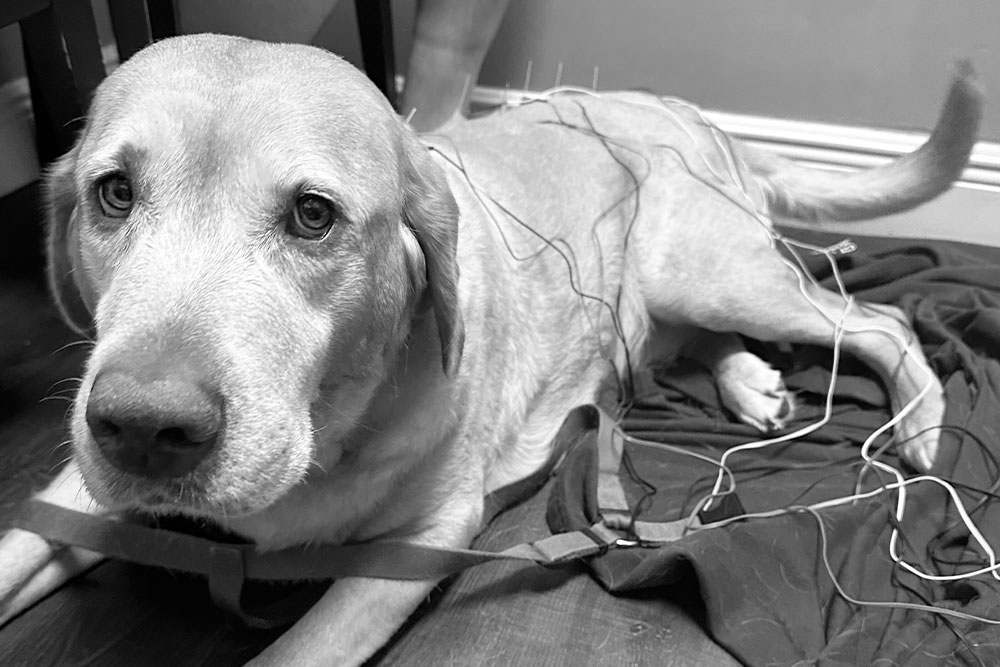
Arthritis and degenerative joint disease are common conditions affecting both dogs and cats. Over time, these conditions can lead to pain, stiffness, loss of strength, and balance difficulties, subtly changing how our pets move—and how they experience the world.
Joint disease rarely appears overnight. It often develops gradually due to small imperfections in the joints or bones. Conditions such as hip dysplasia, ligament injuries, limb deformities, or prior fractures can all increase a pet’s risk of developing arthritis later in life.
While most joint disease cannot be cured without surgical intervention, there are many effective ways to slow progression and keep pets comfortable—especially when treatment begins early and is approached thoughtfully.
Understanding Arthritis and Degenerative Joint Disease
- Arthritis refers to inflammation within a joint
- Degenerative joint disease (DJD) refers to progressive damage to the bones and cartilage that make up a joint
As joints become inflamed and damaged, pets may experience:
- Pain and stiffness
- Reduced flexibility
- Muscle loss
- Difficulty rising, walking, or maintaining balance
The most successful management plans focus on combining therapies, rather than relying on a single treatment alone.
Weight Management: One of the Most Powerful Tools
Excess body weight is one of the largest contributors to worsening joint disease. It increases mechanical stress on joints and promotes inflammation throughout the body.
We use body condition scoring to guide healthy weight management. For pets with arthritis or joint disease, the ideal body condition is typically:
- 4–5 out of 9
Even modest weight loss can lead to:
- Reduced pain
- Improved mobility
- Slower disease progression
Weight management is often one of the most impactful—and most overlooked—treatments for arthritis.
Consistent, Controlled Exercise
Exercise remains essential for pets with joint disease, but how they exercise matters greatly.
The goal is to:
- Maintain muscle strength
- Support balance and coordination
- Avoid excessive joint stress
The most beneficial exercise is:
- Low-impact
- Consistent
- Shorter sessions performed daily or multiple times per day
Examples include:
- Leash walking
- Swimming
High-impact activities such as jumping, sprinting, or rough play can worsen joint damage and are best minimized.
Rehabilitation Therapy, Water Treadmill, and Laser Therapy
For many pets, rehabilitation therapy can be transformative. Depending on the condition, this may include:
- Physical therapy exercises
- Water treadmill therapy
- Balance and strengthening work
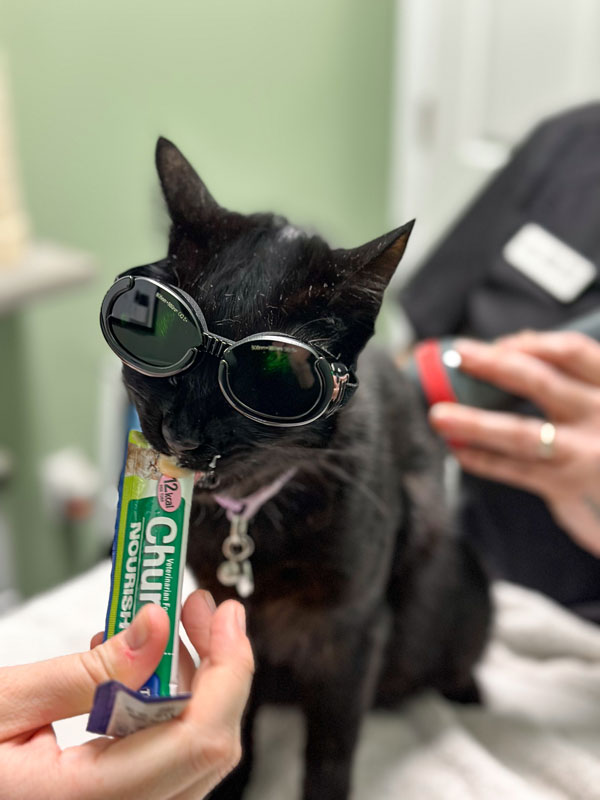
Low-level laser therapy is often incorporated to help reduce inflammation and pain.
We frequently collaborate with specialists in this area, including:
Florida Veterinary Rehabilitation and Sports Medicine
11016 N Dale Mabry Highway, Suite 202
Tampa, FL 33618
(813) 405-4337
Nutritional Support for Joint Health
Omega-3 Fatty Acids (Fish Oils)
Omega-3 fatty acids (EPA and DHA) have been shown to reduce inflammation associated with arthritis.
Important considerations:
- Supplements are not FDA regulated
- Some human products contain vitamins that can be dangerous at high doses
- Many labels recommend doses too low to be effective
Therapeutic dosing is typically 100–150 mg/kg/day of combined EPA/DHA.
Veterinary-recommended brands include:
- Bayer Free Form Snip Tip Fish Oil
- Vetoquinol Omega-3
- Nutramax Welactin
- Nordic Naturals Omega-3
Glucosamine and Chondroitin
Glucosamine-based supplements may help slow joint degeneration, particularly when combined with ingredients like curcumin or Boswellia.
Trusted veterinary brands include:
- Movoflex
- Bayer Synovi G4
- Nutramax Dasuquin
- GlycoFlex III
These supplements require 6–12 weeks to reach full effect.
Prescription Joint Diets
For some families, feeding a therapeutic diet is simpler than supplementing.
Prescription diets formulated for joint disease include:
- Purina JM (Joint Mobility)
- Hill’s j/d
Diet transitions should always be gradual, over 1–2 weeks.
Medications for Pain and Inflammation
NSAIDs (non-steroidal anti-inflammatory drugs) are commonly used to manage arthritis pain and inflammation. When monitored appropriately, they can significantly improve comfort and quality of life.
Other pain-modulating medications may be used alongside NSAIDs to enhance comfort.
Important: Most human pain medications are unsafe for pets and can cause life-threatening side effects. Never give these without veterinary guidance.
Adequan® Injections
Adequan is an injectable medication that helps protect joint cartilage and reduce further damage.
- Initially given twice weekly for four weeks
- Then transitioned to long-term maintenance dosing
- Can be administered by veterinary staff or at home with instruction
Integrative Therapies: Acupuncture and Laser Therapy
Acupuncture
Acupuncture works by stimulating specific points rich in nerve endings and blood vessels, leading to:
- Endorphin release
- Reduced pain
- Improved circulation
- Activation of regenerative processes
There is extensive research supporting acupuncture’s role in managing pain in animals.
We’ve written more about acupuncture here:
Laser Therapy
Laser therapy (photobiomodulation) uses red and near-infrared light to stimulate cellular energy production, resulting in:
- Reduced inflammation and swelling
- Improved blood flow
- Increased tissue healing and regeneration
We’ve written more about laser therapy here:
Traction and Mobility Assistance
As arthritis progresses, pets may struggle with footing and balance.
Helpful tools include:
- Traction products for slippery floors
- Supportive harnesses, such as the Help ‘Em Up Harness
- Environmental modifications
We’ve written more about traction solutions here:
The Assisi Loop®
The Assisi Loop uses electromagnetic pulses to reduce inflammation and improve circulation.
- FDA-approved for post-operative use in humans
- Used at home with a prescription
- Often incorporated alongside other therapies
Your veterinarian can help determine whether this option is appropriate and guide dosing frequency.
Frequently Asked Questions About Arthritis and Joint Disease in Pets
Can arthritis be cured?
Most forms of arthritis cannot be cured, but progression can often be slowed and pain effectively managed.
When should treatment start?
As early as possible. Early intervention leads to better long-term outcomes.
Is exercise safe for pets with arthritis?
Yes—when it is controlled, consistent, and low-impact.
Do supplements really help?
When used at therapeutic doses and given time to work, many supplements provide meaningful benefit.
How do I know if my pet’s quality of life is good?
Comfort, mobility, engagement, and enjoyment of daily activities are key indicators. Your veterinary team can help guide these conversations.
Arthritis and joint disease may change how your pet moves—but they don’t have to define how your pet lives. With a thoughtful, individualized plan, many pets remain active, comfortable, and joyful well into their senior years. If you believe your pet is experiencing arthritis or other forms of pain, please reach out to schedule a consultation with one of our caring veterinarians at 813-749-6863 or request an appointment online here.
If you have concerns about your pet’s mobility or comfort, the veterinary team at West Park Animal Hospital is here to help. We prioritize time, education, and individualized care so you can make informed decisions that support your pet’s long-term wellbeing.





Leave A Comment